AstroLynx: Wearable Safety System for Space Exploration

A distributed wearable system that detects hazards, tracks astronaut movement without GPS, and coordinates teammate assistance in real time.

AstroLynx wearable safety system

Story

AstroLynx was built during a hackathon around the challenges of planetary exploration. Without GPS and immediate communication with Earth, small environmental hazards could quickly become serious emergencies.

Our goal was to build a wearable system that could recognize when an astronaut entered a dangerous state, locate the nearest safe teammate, and coordinate assistance between them.

The concept was intentionally futuristic and playful, but the prototype explored practical questions in human-centered design, safety-critical feedback, wearable hardware, and distributed sensing.
Design

Distributed Wearable Architecture

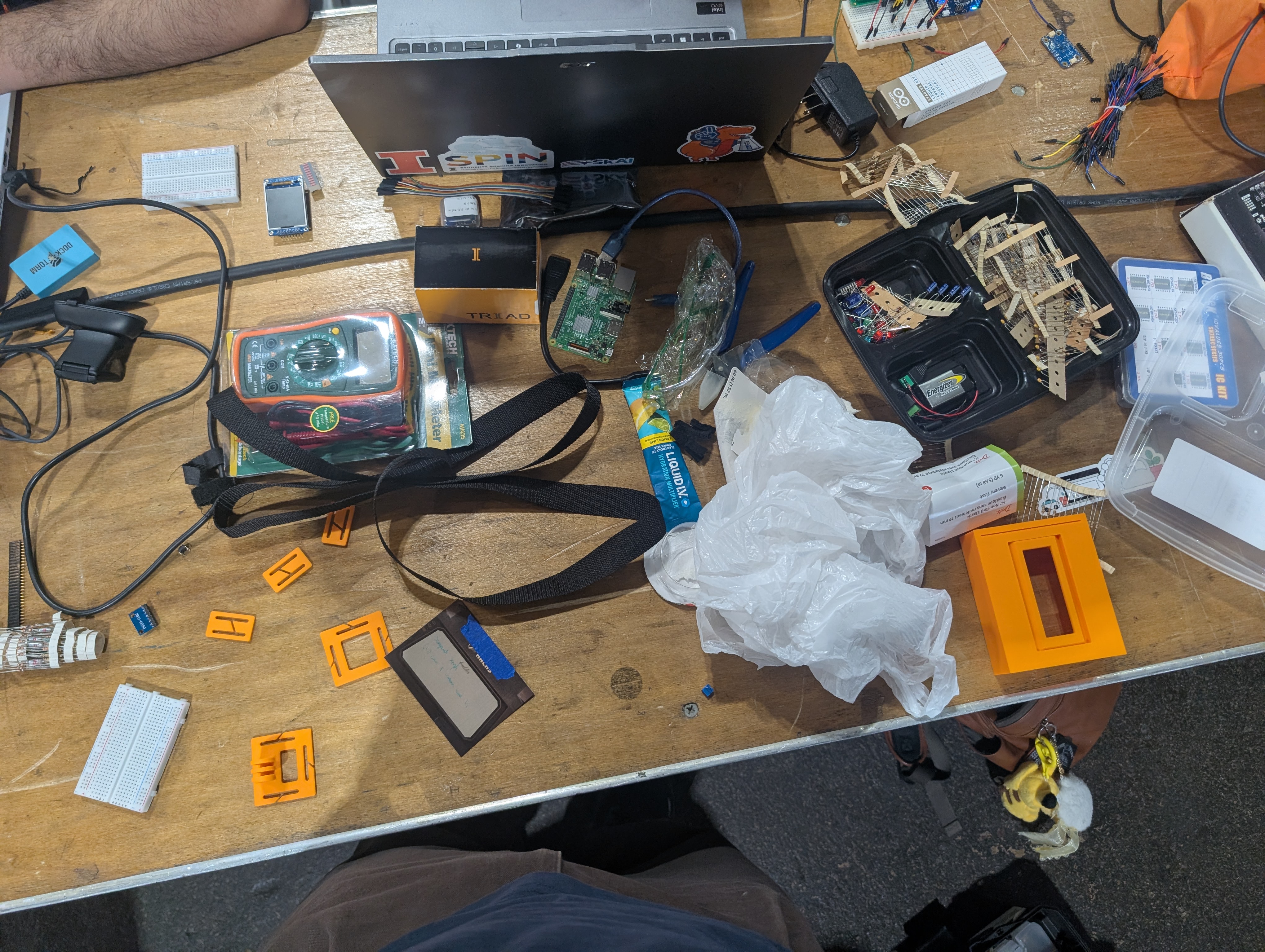
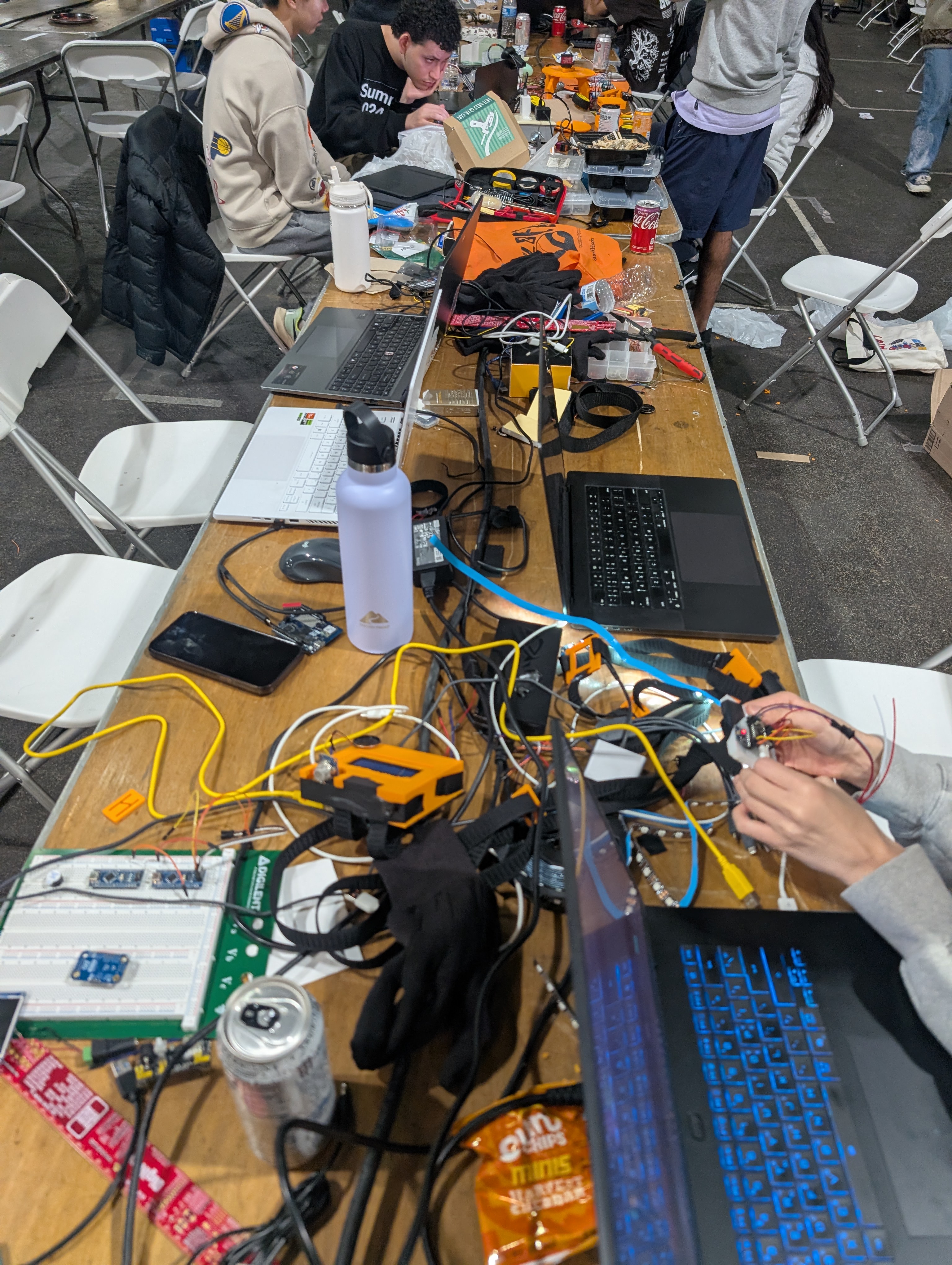
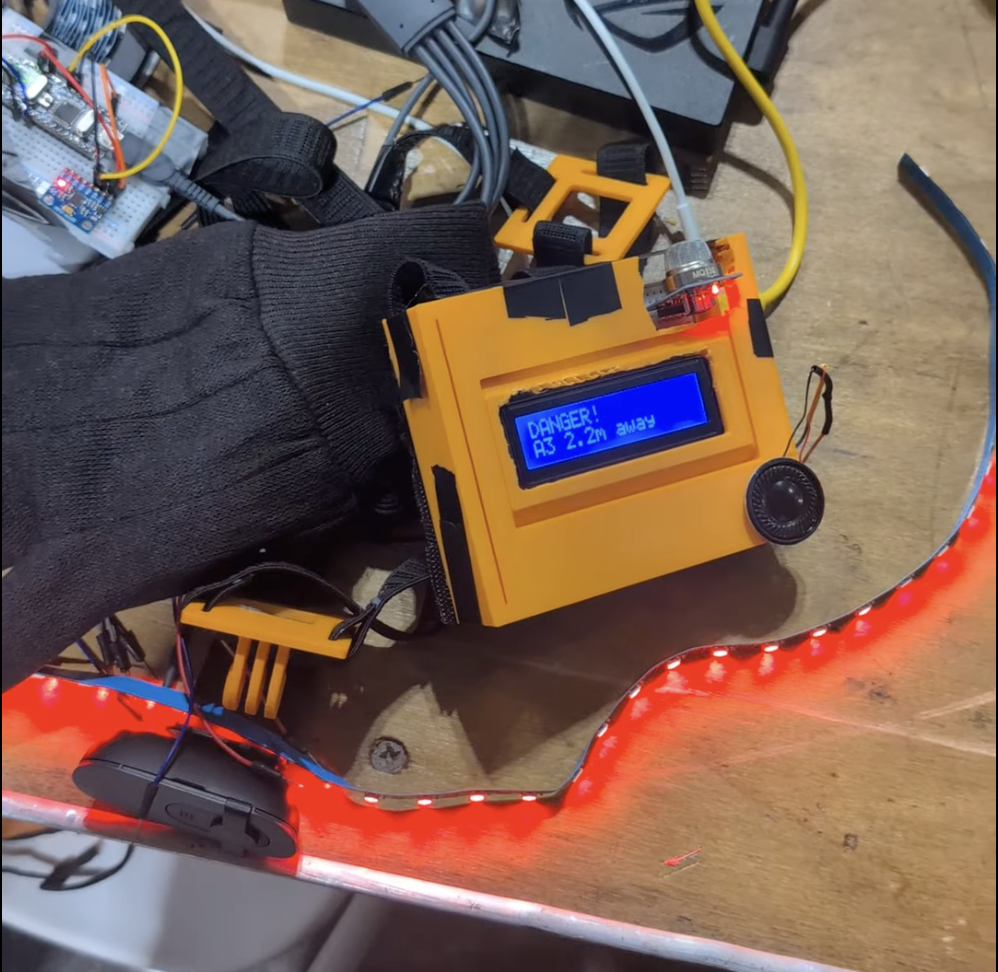
AstroLynx divided sensing and feedback across four body-mounted modules. An Arduino and IMU were mounted on the chest, a camera and RGB LEDs on the head, a Raspberry Pi on the back, and an LCD, buzzer, and gas sensor on the wrist. Each module handled a focused sensing, processing, or feedback role.

Relative Positioning

Because GPS was assumed to be unavailable, the system estimated movement from IMU heading and step detection, then maintained a simplified local map of each teammate. This was a practical hackathon alternative to full SLAM, not a high-accuracy localization system.

Hazard Detection and Rescue Coordination

Gas exposure, excessive motion, or camera-detected obstacles could trigger a danger state. AstroLynx then selected the nearest safe teammate and guided both users through visual, audible, and screen-based feedback.

User Feedback

Green LEDs indicated a safe state, red indicated danger, and blue indicated that the wearer was assisting a teammate. The wrist LCD displayed status and environmental readings, while the buzzer provided an immediate alert.

Challenges

Localization was the largest scope decision. Full SLAM would have consumed most of the hackathon, so we accepted a rough relative position estimate based on heading and detected steps. It was less accurate, but sufficient to demonstrate the assistance workflow.

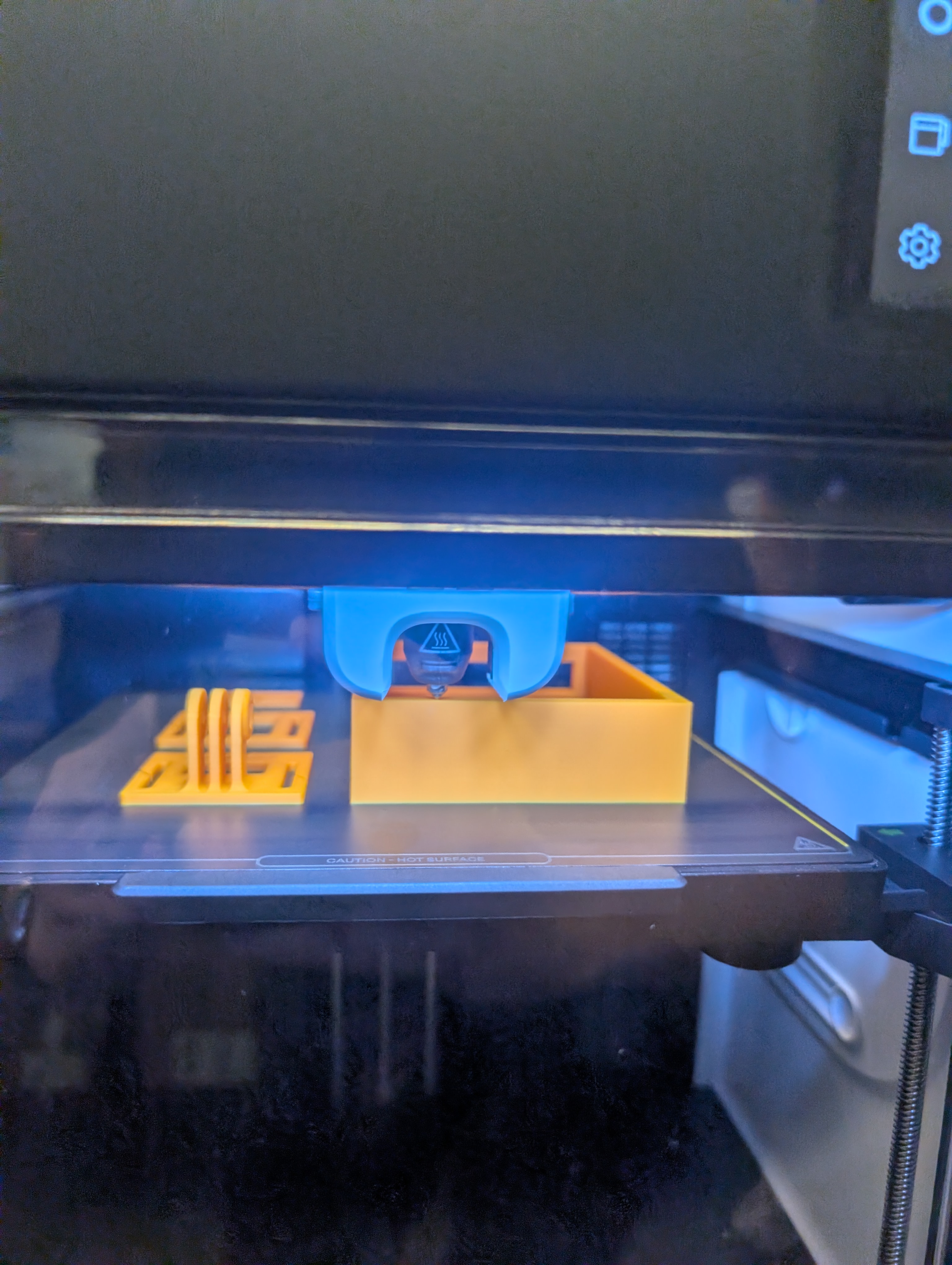
We also had to integrate several devices and communication paths while deciding where each sensor could be worn comfortably and still collect useful data. Reliable behavior during the live demo mattered more than adding another unfinished feature, so we kept interfaces and failure states simple.

Results

  • Built a working multi-module wearable prototype
  • Integrated sensing across Arduino and Raspberry Pi hardware
  • Demonstrated relative positioning without GPS
  • Added obstacle, gas, and motion hazard detection
  • Implemented teammate-assistance logic
  • Delivered real-time visual, audible, and screen feedback
  • Completed the system within the hackathon timeframe

Skills Demonstrated

  • Embedded C++
  • Python
  • Arduino
  • Raspberry Pi
  • IMU Integration
  • Gas Sensing
  • OpenCV
  • Camera-Based Obstacle Detection
  • LCD Interfaces
  • Buzzer Alerts
  • RGB LED Feedback
  • Inter-Device Communication
  • Wearable Prototyping
  • Human-Centered Design
  • Distributed Systems
  • Rapid Prototyping